Real-World Task Guidelines:
Stage I
CLB 2
Community and Recreation
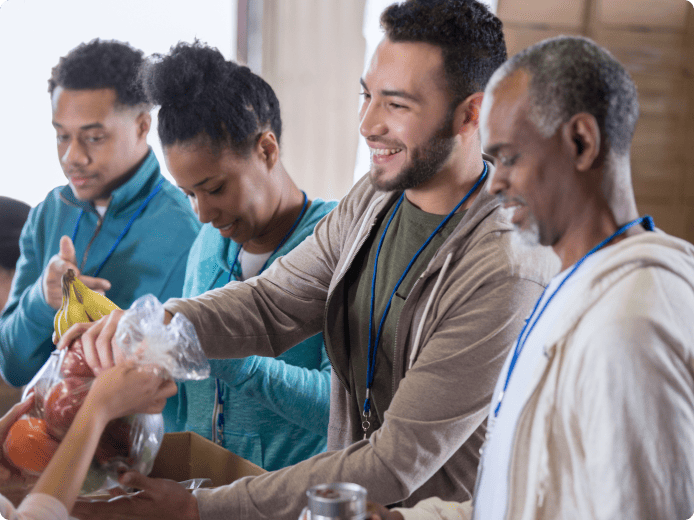
Possible Topics
This theme may include these topic areas:
And so on
Planning Context
Learners may require the following:
- Visual supports
- Short and simple text
- Face-to-face interactions
- Slower rates of speech
- Short, supportive contexts
Instructors may need to:
- Adapt online resources for accessibility/ use in the classroom and explain that certain tasks are authentically completed online
- Slow their rate of speech
- Use everyday common speech and text
Comprehending Information
Understand simple information about familiar, concrete topics.
- Identifies specific factual details, such as numbers, letters, time, place, key words and expressions.
- Understands simple phrases, short, simple sentences and a few factual details.
Comprehending Information
Understand simple information about familiar, concrete topics.
- Identifies simple factual details, such as numbers, letters, time, place, key words and expressions.
- Identifies words related to personal identification information.
Interacting with Others
Understand greetings, introductions, requests, goodwill expressions and an expanding range of basic courtesy formulas.
Communication is very brief, 2 or 3 turns.
- Identifies common courtesy phrases and an expanding range of expressions.
- Identifies participant roles and relationships based on courtesy formulas and introductions.
Sharing Information
Give expanded basic personal information to a supportive listener.
- Answers simple questions about personal information.
- Expresses basic ability or inability.
Interacting with Others
Use and respond to courtesy formulas and greetings. [Interlocutors are familiar and supportive.]
- Initiates and responds appropriately to introductions and leave-takings using appropriate courtesy formulas.
- Opens a short conversation.
Getting Things Done
Get information from simple formatted texts (such as simple forms, maps, diagrams, signs, labels, tables and schedules).
- Recognizes layout.
- Scans text to find specific details.
Getting Things Done
Get basic information from short, simple business or service notices.
- Scans text to find specific details.
- Finds key words and simple details.
Comprehending Information
Understand the purpose and some basic details in very simple, short texts related to everyday familiar and personally relevant situations and topics.
- Identifies purpose.
- Identifies numbers, a few key words and short, common expressions.
Getting Things Done
Complete short, simple or simplified forms that require only basic personal identification or familiar information. [Forms contain up to about 10 personal identification items, and have clear labels and areas in which to write.]
- Follows some conventions for addresses, telephone numbers, etc.
- Follows some basic spelling conventions.
Sharing Information
Write a few words to complete a short, guided text or answer simple questions to describe a personal situation.
- Writes personal details in response to a few short questions.
- Follows some spelling and punctuation conventions.
Reproducing Information
Copy a range of information, from simple lists or very short passages, for personal use or to complete short tasks.
- Copies letters, numbers, words, and sentences with correct capitalization and punctuation.
- Copies text with no major omissions and only occasional copying mistakes.
Interacting with Others
Convey an expanding range of goodwill messages by means of standard cards or guided notes.
Messages are a few words or short phrases, addressed to a familiar person and related to personally relevant situations.
- Completes a message with familiar information.
- Uses adequate spelling and punctuation.
Additional Sample Real-World Tasks and Competency Areas
Listen to expressions to welcome new families to the neighbourhood. (Interacting with Others)
Ask for assistance finding English learning materials at the library. (Getting Things Done)
Read a few short sentences about summer programs for children. (Interacting with Others)
Complete up to 10 items on a school form to allow your child to join the school basketball team. (Getting Things Done)
Additional Resources
Digital Literacy Strategies
Successful completion of some tasks may require some baseline digital knowledge and skills.
Learners may need to:
- Use familiar apps, web pages and/ or social media sites.
- Fill in forms online.
- Scan online resources to find information.
- Introduce tools and apps that can aid learners in coping with communication barriers, such as translation, pronunciation, text to speech, speech to text tools and so on.
Instructors can:
- Support learners in finding, navigating and using websites and apps.
- Teach reading strategies such as skimming and scanning to find information on websites.
- Share knowledge and strategies to ensure online safety.
- Refer learners to programs to improve their digital skills.


Equity, Diversity and Inclusion Strategies
Instructors Can:
- Use diverse representations of people in all your learning resources and images, including people who are 2SLGBTQIA+, Indigenous, Francophone and of other cultures, and people who have disabilities or who are neurodivergent.
- Use diverse representations of community events in your learning resources such as special days that celebrate 2SLGBTQIA+, Indigenous, Francophone and other cultural groups.
- Recognize and teach learners that Canada is a diverse place and has people from many different cultures. Canadian culture includes the cultures of all people in Canada.
- Use gender neutral titles when addressing people.
Trauma-Informed Strategies
Triggers:
- Discussions of poverty and food scarcity may be triggering for learners who have experienced shame or social stigma related to this topic.
- Filling in forms can be a trigger for learners who have experienced trauma.
Strategies:
- Give learners advanced warning of discussions of this topic.
- Allow learners the choice:
- to work on a different topic
- to share or not share their own experiences
- to work alone or to work with others
- to take care of themselves
- to step out of the learning environment
- Learners have the right to choose if, when and what they share about themselves.
- Make space for learners to feel safe and recover from the experience of sharing their experiences.
- Giving learners the knowledge, skills and language to access resources can be empowering.

Sample Real World Tasks
This information is aligned with the Canadian Language Benchmarks (CLB) and is designed to help guide you in the planning process. You can use these sample real-world tasks to guide and inform your selection or creation of skill-building activities, skill-using tasks and assessment tasks.
These sample real-world tasks include the following: skill, real-world task, competency area, one competency statement and two sample indicators of ability. This is not an exhaustive list: there are more indicators of ability and information about this CLB level in Canadian Language Benchmarks English as a Second Language for Adults. Consult this resource for more information and to select your own competencies or indicators of ability. Remember, you can use more learner-friendly language in your materials and assessments.
This is NOT a lesson plan, module plan or curriculum.